
Finding Gloucester Resident Records
Gloucester keeps no single roll of everyone who lives in the city. The question shapes the starting record. Start with an address? The City of Gloucester Assessments Online portal connects a property to its parcel and the owner or taxpayer label on file. Names work differently. The Massachusetts voter-status form checks one individual, while a local voter list is requested from the City Clerk under state access rules. Salem Deeds identifies the parties to recorded land instruments. For a person from an earlier period, digitized city directories and local newspaper holdings often supply the dated address that modern systems cannot.
Remember what each record actually says. A deed party signed or received an instrument. An assessor entry supports tax administration. A directory entry is a publisher's snapshot. None of them, standing alone, proves who occupies an address today. Gloucester research is strongest when a name, address, and date line up across separate custodians.
- Start with an address in the Gloucester Vision assessment search when the parcel is known. Record the assessment year and the displayed owner or taxpayer field.
- Use the Massachusetts Voter Registration Search only for its stated individual-status purpose. It requires a first name, last name, full birth date, residential ZIP, and agreement.
- Search the Southern Essex Registry of Deeds for a recorded transaction, then open the image and note the book, page, parties, and recording date.
- For a historical household, consult a directory year and compare the printed name, address, and page with nearby editions or a newspaper notice.
- When an item is not online, make a narrow request to the holding office or ask Sawyer Free Library or Gloucester Archives whether it is on microfilm, digitized, or available by appointment.
Gloucester Resident Record Custodians
Custody decides where a Gloucester record lives. The City Clerk runs local elections, the annual street list, qualifying vital records, marriage intentions, and municipal certificates. The Assessors keep valuation records. Recorded land instruments for Gloucester rest with the Southern Essex District Registry of Deeds. Court files sit elsewhere. The Gloucester District Court and the Essex Probate and Family Court each hold their own case files, while statewide systems fill narrower roles like voter status and court-search access. A request should name the record type, date range, and custodian rather than ask for a general file on a person.
Southern Essex Registry
100 Cummings Center, Suite 206-C
Beverly, MA 01915
978-542-1704
Once the custodian is clear, property and address work along a named road fits the Gloucester street records workflow. It keeps street-level lookups organized.
Gloucester Parcel Records by Address
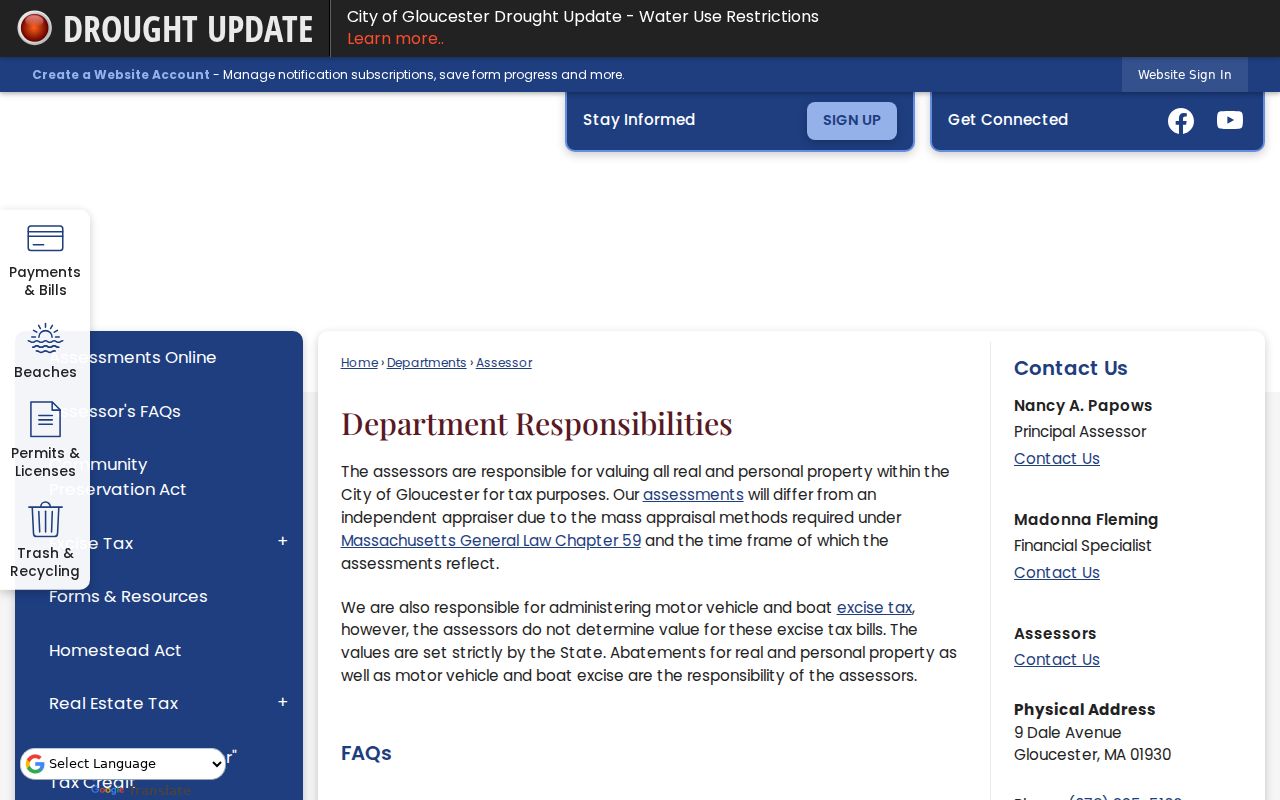
Vision is Gloucester's public assessment portal. Searching runs four ways. An address or street works. An owner or name works. A map or parcel works, and a parcel and account identifier works too. A result page may list the parcel address, owner or taxpayer label, and classification. It may also list land and improvement values, sales information, building description, and valuation history. The city treats all of it as assessment material under Massachusetts tax law. That opens a parcel question. It does not prove the listed party lives at the address. The Gloucester Vision assessment portal below shows its public search entry point.
Save the parcel identifier and date before any comparison.
| Vision field or mode | Use in Gloucester research | Limit |
|---|---|---|
| Address or street | Find a parcel from a number and street name. | Street spellings and suffixes can vary in older records. |
| Owner or name | Search the displayed taxpayer or owner label. | A label does not establish occupancy. |
| Map or parcel | Resolve an ambiguous address spatially. | Use the live map and legal description to confirm. |
| Account identifier | Open a known assessment card. | Record the fiscal context for later comparison. |
Gloucester Voter Lists Have Limits
Massachusetts keeps the individual online registration-status check separate from local voter-list access. The online form asks for a first and last name, date-of-birth fields, and a five-digit residential ZIP. It also includes an agreement checkbox. Local lists take a request. Gloucester's City Clerk and Board of Registrars handle them. The request should name the ward, precinct, election or list date, and desired format. The city ward and precinct map adds the geographic context that a bare address lacks.
Public local-list fields can include name, address, party, date of birth, active or inactive status, and voter ID. They can also carry registration date and certain voting-history fields. Phone and email stay private. So do veteran status, permanent-absentee status, confidential-voter information, and minor or pre-registrant information. Each entry speaks only for that election's date.
Gloucester Requests Beyond the Portal
Gloucester points to NextRequest when a municipal document is not posted online. Written, email, and oral requests also work. The city follows a 10-business-day response framework under the Massachusetts Public Records Law, G.L. c. 66, § 10. Narrow the window. A good request also names the office, record series, and any address or name variant. Electronic delivery is preferred when practical, and the Records Access Officer can issue a good-faith cost estimate for permitted work. Gloucester's public-records request instructions outline the local process.
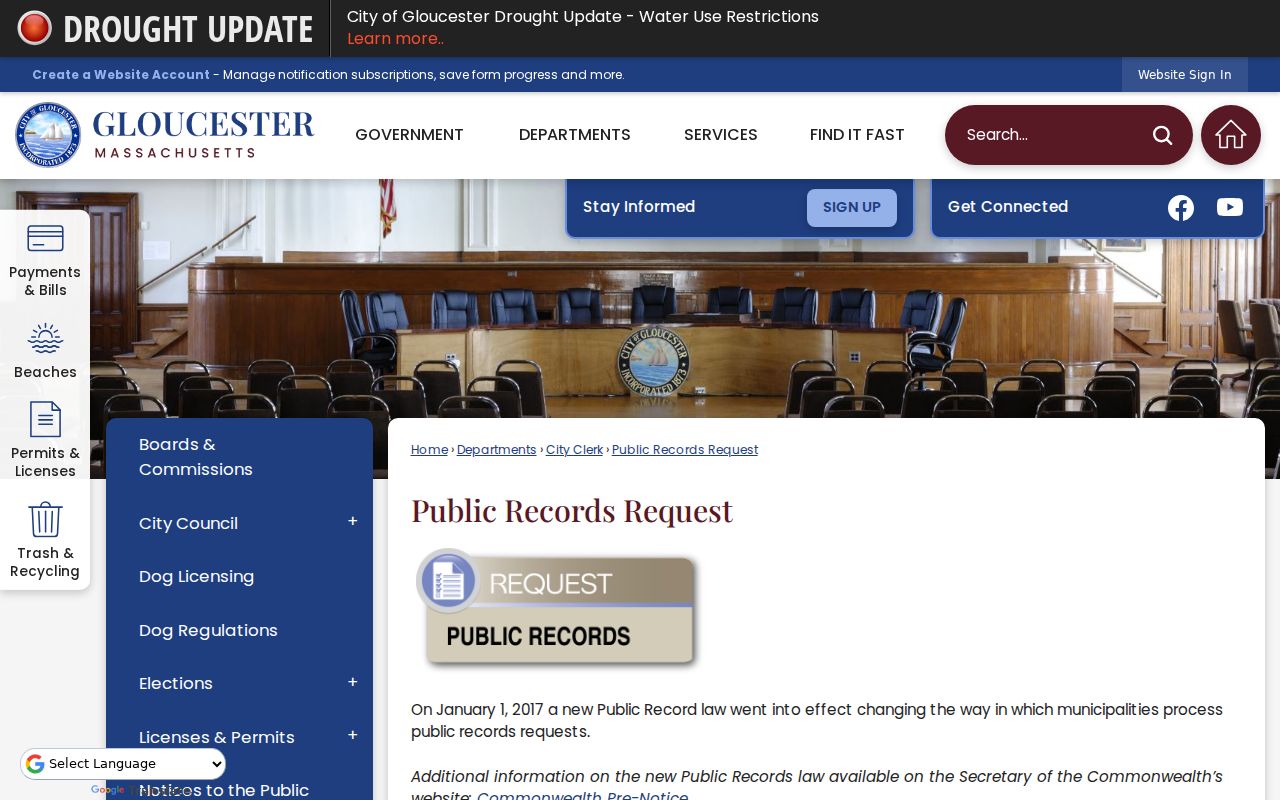
Ordinary municipal records follow the request route. Vital certificates do not. They run through the City Clerk's own form, eligibility, identification, and fee rules, while the Gloucester NextRequest portal provides a searchable archive and a Make Request option.
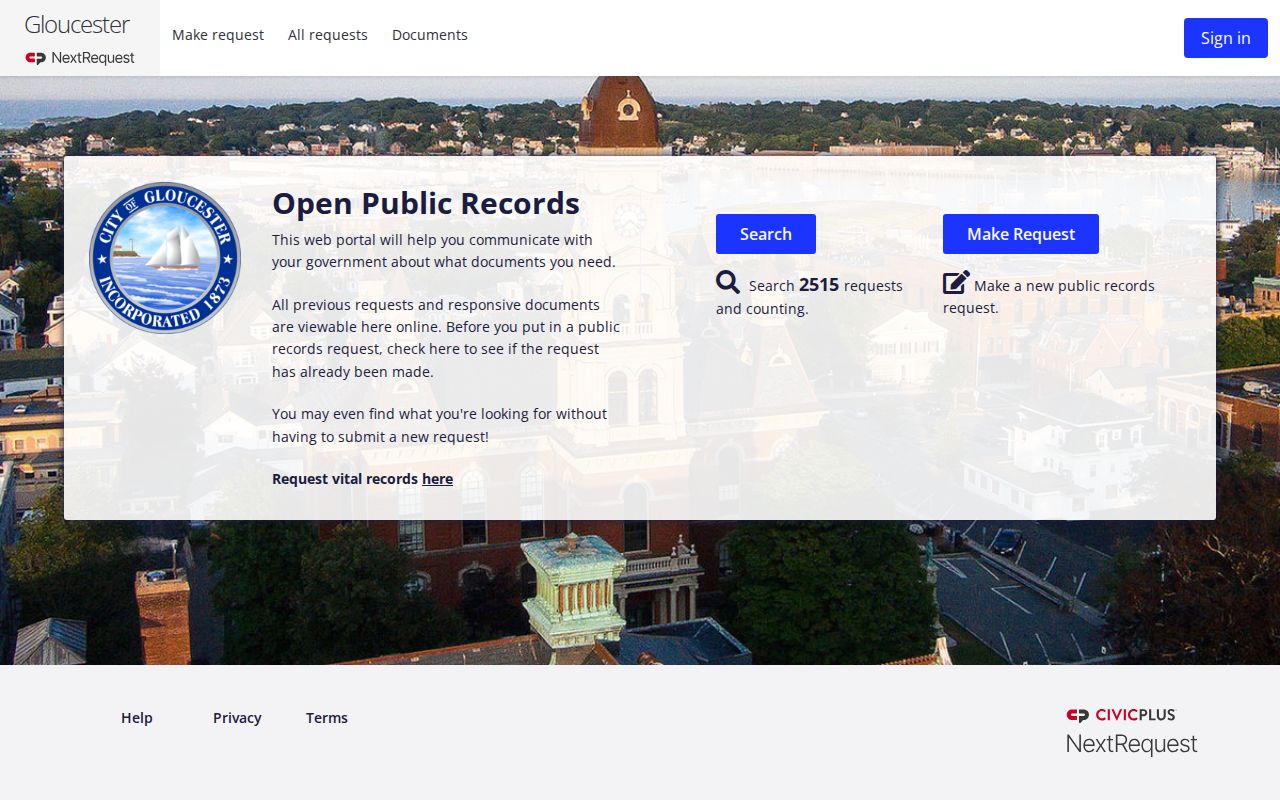
A posted request title or attachment is only a lead. It does not prove every responsive record was produced, or that anyone named in it still has a current connection to Gloucester.
Current Gloucester Resident Sources
Current sources answer narrow questions, never a broad census of every resident. An assessor card names a tax parcel and its label. A recorded deed names a party and a transaction. A local election list is an administrative snapshot governed by state access rules. MassCourts may show public party and docket information. Restricted matters never appear there. Label every result with its source and date.
| Source | Who It Lists | Keeper | Access |
|---|---|---|---|
| Vision assessment card | Owner or taxpayer label for a parcel | Gloucester Assessors | Public portal; not occupancy proof |
| Voter status or local list | Registration information at a stated date | State form and City Clerk | Restricted and confidential fields excluded |
| Recorded-land index | Parties, date, book/page, instrument | Southern Essex Registry | Public images vary by era |
| City staff directory | Municipal office contacts | City of Gloucester | Use to locate a custodian |
| Local repositories | Dated directory, newspaper, map, or archival entry | Sawyer, Archives, Cape Ann Museum | Online, microfilm, or appointment access |
One match is rarely enough. Pull the date, the address, and the person's role before trusting any Gloucester record. A residents directory entry, a deed, and a voter roll can all name the same person in different years. Stay with one individual at a time. Merging unlike records into a single profile invites errors.
Gloucester Deed Parties by Date
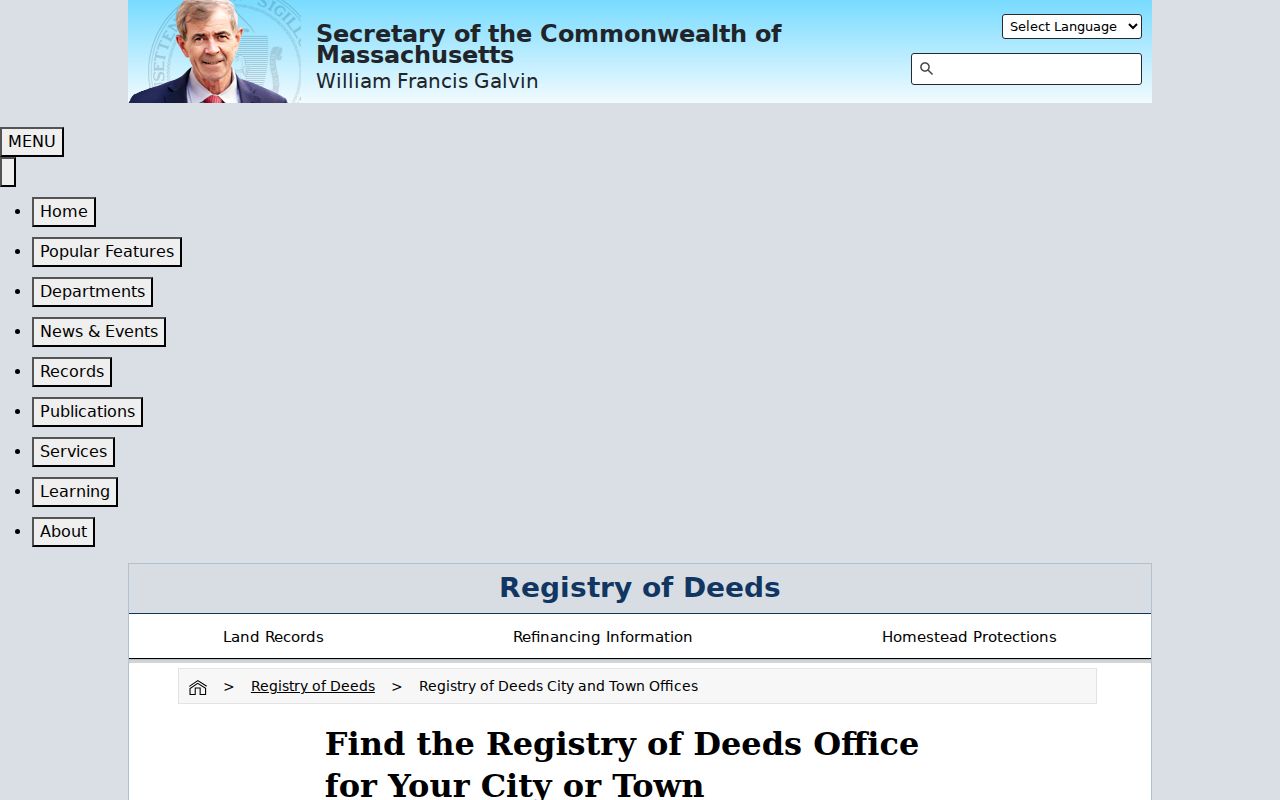
Gloucester records its deeds through the Southern Essex District. Salem Deeds holds recorded-land images from Book 1, Page 1 in 1640 onward, though its electronic index only starts at January 2, 1951, Book 3793, Page 408, and earlier coverage runs thin. The Secretary's Southern Essex town locator confirms the district assignment for anyone unsure where to begin. The Registry Street Search works well for address work. Pick Gloucester, type the street name without any suffix, add the primary number, and narrow the span of dates. Name Search covers grantors, grantees, or both at once. A grantor conveys an interest; a grantee takes one.
Open the instrument image itself after any index hit. The legal description, prior reference, recording data, and named parties carry far more than a single result row ever will. Remember what a deed is, though. It records a transaction, not a full picture of who lives in Gloucester today or who holds the property now.
Gloucester Directory Years and Gaps
Gloucester directory research runs unusually deep. Sawyer Free Library describes digitized Gloucester city directories covering 1860 through 1993, gaps included. The NOBLE Digital Heritage collection posts year-by-year scans. The visible run opens with 1860, 1866, and 1869. It moves through single- and two-year volumes and stretches into later decades. Cape Ann Museum adds partial holdings from 1860 to 1978. The State Library offers a second coverage check, along with selected voting lists and microfilm. A printed directory can supply a name, an address, an occupation, and a page number. It can also skip a household entirely. Or it may file someone under a village heading like Annisquam, Magnolia, Lanesville, or East Gloucester. Keep the original spelling, edition, page image, and section type. Check any find against the next or previous edition before claiming an identity. You can also use a deed, a census release, a newspaper notice, a cemetery record, or a town report.
- Directory entry
- A dated publisher's listing, not an official census or a claim of current residence.
- Index
- A finding tool that points to a page or record. It is not a substitute for the source image.
- Criss-cross directory
- An address-ordered directory format. A dedicated official Gloucester run was not located, so older address work may require manual page searching.
- Parcel
- A mapped tax unit that can be linked to an assessor card or legal description, but not automatically to a resident.
Gloucester Archives and Clerk Records
Gloucester Archives, housed at City Hall, keeps municipal records reaching back before 1642. The collection spans town and city material, property records and maps, vital books, annual reports, directories, genealogies, and the Peterson vertical newspaper file. Its Digital Collections put selected town, selectmen, vital, commoner, directory, map, and vessel material online. Plenty more sits in finding aids, on microfilm, or behind an in-person question. Call ahead, since posted hours and collection condition shift. The Gloucester City Clerk records hub anchors the municipal side of a search: elections, annual street-list work, vital records, marriage licensing, local certificates, and official city documents.
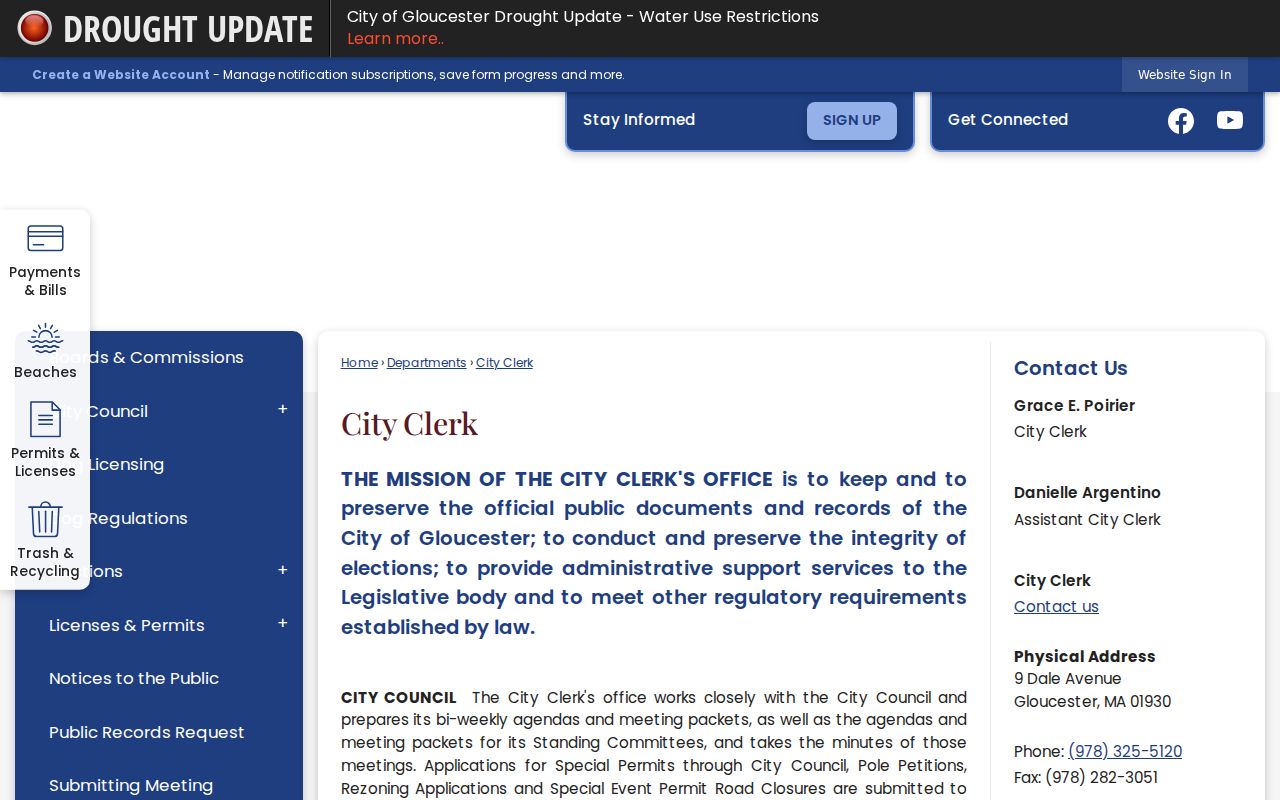
The Clerk wears several hats. That explains why an old street list, a current election question, and a certificate request can follow separate procedures even when all three concern the same Gloucester residents directory trail.
Gloucester Villages Change Searches
Gloucester records use several geographic languages. A document may say Annisquam, Bayview, Downtown Gloucester, East Gloucester, Eastern Point, Rocky Neck, Briar Neck, Lanesville, Magnolia, Riverdale or Dogtown, West Gloucester, Wingaersheek, or Pearce Island. A ward and precinct are election units. A parcel is an assessor and map unit. A ZIP is a delivery label. These terms can overlap without having the same boundary.
Use the original place wording as a search term, then compare it with the street address, MapGeo parcel, ward map, and USPS result. Gloucester's P.O. Box convention uses 01931 in city documents, while ordinary street delivery uses 01930 in the available research. A post-office box or a tax mailing address is not a residence location.
Note: Preserve both the historical village label and the standardized address when they differ, because forcing one modern label can hide a useful search path.
Gloucester Records Access Changes
Access conditions shape every Gloucester records search. A 2025 Sawyer Free Library FAQ described renovation-related limits and storage issues. It also laid out plans for a climate-controlled History Center. Gloucester Archives material also weathered a 2023 fire. A later Historical Commission project reorganized paper files. None of this means records vanished. It means asking whether an item is digitized, on microfilm, or under arrangement. Ask whether it sits in the library or is appointment-only. The city and the library keep steering researchers toward digitized directories, newspapers, and deeds. Maps, town records, and yearbooks are part of that push too. Portal counts, hours, fees, and interface labels all shift. Note the access date whenever a lookup pays off. Save a stable link or citation too.
Gloucester Vital and Court Routes
Vital certificates and court files sit apart from ordinary name-search results. The Gloucester City Clerk holds a birth record when a parent lived in Gloucester or the birth took place in the city. Marriage records land there when intentions were filed locally. A death record belongs to Gloucester when the death occurred there or the decedent was a resident, subject to the city's stated exception. Applications run through in-person, mail, and online routes, and the office issues certified copies rather than photocopies or electronic versions. The fee schedule is $15 for the first certified copy, with additional copies of the same record at $7.50 when ordered together.
Access limits apply. Massachusetts restricts recent birth and marriage records under M.G.L. c. 46, § 2A, and state materials set a 90-year public-access threshold for those records plus 50 years for death records. Custody and the condition of the record still matter. Gloucester also notes that Social Security numbers on death certificates are redacted, with limited proof-based exceptions.
Court research starts with MassCourts, the statewide public case-search portal. Its form narrows a query by court department, division, location, name, case type, case number, or ticket and citation number. A public docket can show parties, events, and disposition data. Sealed, juvenile, expunged, adoption, and other protected material may be absent. For official files, certified copies, archival questions, and restricted-record guidance, the Gloucester District Court clerk or the Essex Probate and Family Court register is the route.
Write down the court location and full case number before asking a clerk to pull a file. MassCourts can display more than one row for a single matter because it tracks several parties, and a short case code explains nothing about the result. A precise request names the court, docket number, party, and document, plus whether an attested or certified copy is needed. When an online search comes back empty, the cause may be a date or location mismatch, restricted access, archival custody, or a search-format quirk. That is not proof no record exists.
Historic Gloucester Resident Directories
Read each directory as a dated snapshot. The 1873 volume, for instance, bundles a general directory with streets, courts, and places, businesses, banks, cemeteries, churches, city officers, and a census comparison. Collection metadata ties some early volumes to Procter Brothers. The 1888-89 and 1890-91 editions carry the Sampson, Murdock and Co. name. Publishers and publication patterns shifted across the long run. The title page of the particular copy is the source for any imprint.
Family-history work benefits from a simple routine. Start with the nearest known year. Search name variants and the address, then compare adjacent volumes. Full holdings, scan behavior, sample-entry fields, and the manual address method appear on the Gloucester city directories page. A missing year is a coverage gap, not proof that nobody lived there. The following volume may reveal a move or a printing omission.